
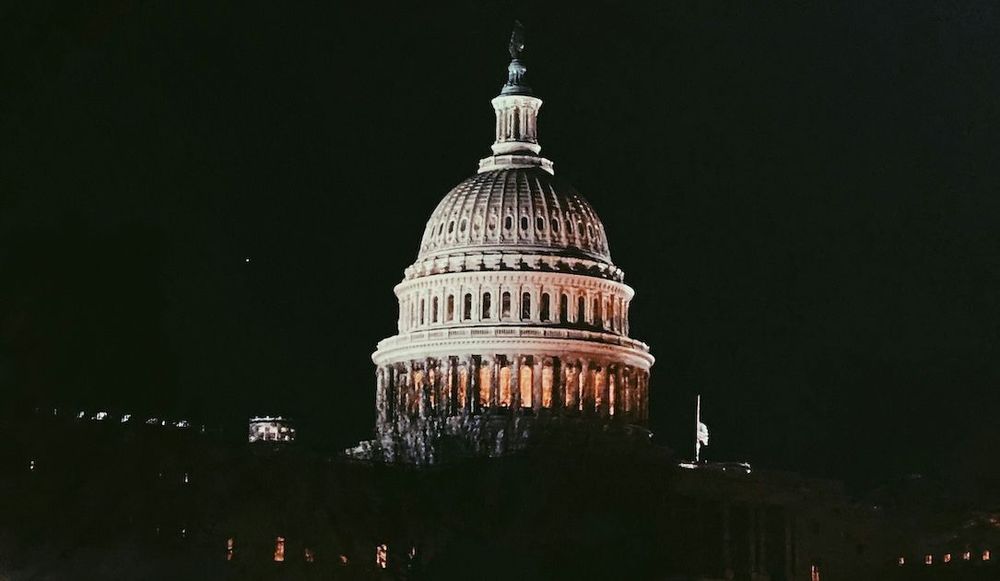
House passes kids’ online safety bill, but Senate approval unlikely
The House on Monday night passed legislation that would bolster kids' online safety, but has been derided by many advocates and key senators as privacy invasive and too weak.
The Kids Internet and Digital Safety (KIDS) Act passed with bipartisan support by a 267-117 margin, winning the two-thirds majority needed to greenlight the legislation under a process that speeds up a bill’s path to a vote but requires more than a simple majority.
Despite overwhelming support for the bill in the House, it faces a steep climb in the Senate where a large majority of lawmakers support a competing bill with stronger safeguards, including a so-called duty of care provision which forces big tech to put children’s safety first in their platforms’ design.
In addition to the omission of a duty of care provision in the House bill, it does not block more restrictive state laws and also leaves out language preempting some state artificial intelligence laws. Most Republicans favor preemption, but Democrats do not.
Kids online safety legislation has been a priority for federal lawmakers for years, but they have to date failed to reach a compromise, leaving various efforts to pass a bill stagnant.
The KIDS Act was created after a Republican-only working group spent months meeting with stakeholders to inform the bill’s design. After Democrats objected to what they saw as a weak bill, House Energy and Commerce Committee leaders approved a compromise version allowing states to pass more restrictive kids online safety laws without the threat of preemption from a federal law.
The House bill makes some significant changes to current law by mandating that AI chatbots disclose they are not human, requiring age verification for users seeking to view porn and imposing requirements on data brokers handling kids’ information.
Senators rebel
Sens. Richard Blumenthal (D-CT) and Marsha Blackburn (R-TN), who authored the bipartisan Kids Online Safety Act (KOSA) supported by more than three-fourths of the Senate, slammed the House bill in a statement released Monday night.
“Instead of passing a federal standard that will protect America’s children from Big Tech’s greed, the House of Representatives just passed legislation that is a pale imitation of Big Tech accountability,” the statement said.
“The House’s decision to strip out the duty of care will only maintain the status quo in which Big Tech uses our kids as profit centers and leaves parents to pick up the pieces.”
Blackburn has been collaborating with the White House to get her tougher kids online safety bill passed. Her effort includes a plan to preempt some state AI laws, a priority for the administration.
The senators pledged to block the KIDS Act, saying they will not “greenlight hollow reforms that allow Big Tech’s predatory business model to remain intact.”
Digital freedoms and civil liberties advocates also strongly condemned the bill, saying the age verification element is a threat to the privacy of all internet users.
Pockets of support
The KIDS Act received more support from advocates at ParentsSOS, a group of family members who have lost children to suicide as a result of online harms.
ParentsSOS expressed disappointment that the bill did not include a duty of care and pledged to continue pushing for one, but also highlighted positive elements of the bill.
The bill “contains meaningful improvements that our members have advocated for, including provisions that protect states’ ability to issue stronger regulations and hold tech companies accountable for the presence of children and teens on their platforms,” the group said in a statement.
Elements of the KIDS Act praised by ParentsSOS include its inclusion of safeguards against features that drive addiction, geolocation sharing and outreach from unknown adults, bans on targeting ads to minors and a knowledge standard that bars big tech from “pretending they do not know preteens are on their platforms,” the statement said.
The compromise House bill released last week and passed Monday updates an original bill that included preemption and passed through the committee on a party line vote in March.
Some Democrats, including Reps. Lori Trahan (D-MA) and Sam Liccardo (D-CA), supported the bill, urging colleagues in the Senate to pass the legislation even if it is imperfect.
“Three decades have passed without Congress acting to protect kids on the internet,” Liccardo said in an X post Monday.
“We can continue to persist in making the perfect the enemy of the good, or we can seize this moment to pass common-sense, bipartisan protections against child manipulation, sexual exploitation, and harmful data practices, while ensuring that states like California can enact even stronger safeguards.”



Suzanne Smalley
is a reporter covering digital privacy, surveillance technologies and cybersecurity policy for The Record. She was previously a cybersecurity reporter at CyberScoop. Earlier in her career Suzanne covered the Boston Police Department for the Boston Globe and two presidential campaign cycles for Newsweek. She lives in Washington with her husband and three children.